Category: Federal

  • Child trafficking: Canada's historical shame

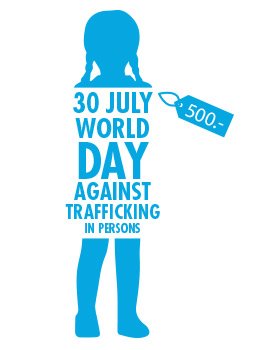
    July 30th marks World Day Against Trafficking in Persons. The office of the Status of Women, Government of Canada retweeted about it, as did many others, raising awareness of the devastation committed against trafficked persons, many of them children, most of them female.


      RT According to , women & girls represent 71% of victims. Modern slavery is real, we must


    From 1869 to 1932, Canada participated in a child emigration scheme hatched in the UK which saw more than 100,000 children brought into the country for labour, mostly domestic work for girls and farm work for boys. These children were not orphaned, as many were lead to believe. Their crime, or the crime of their parents, is that they were poor. The governments of the United Kingdom and Canada entered into an agreement to remove these children, often right off the street, ship them to Canada and send them to Canadians who needed an “extra hand”. Surviving ‘home children’ and their descendants tell stories of physical and sexual abuse by their ‘host families’.
    The British Home Children scheme was state-sanctioned child trafficking. And despite efforts of many, and an acknowledgement from the House of Commons, the Prime Minister of Canada has not issued a formal apology for this atrocity.
    Read more about the British Home Children.

  • New cabinet of the new Trudeau government & an opportunity

    New government! New opportunities!
    immigrantchildren.ca calls on Justin Trudeau, Minister for Youth, John McCallum, Minister of Immigration, Refugees and Citizenship, and Jean-Yves Duclos, Minister of Families, Children and Social Development to create an inter-ministerial committee to support and promote immigrant and refugee children’s healthy integration into Canadian society.

  • Policy advice for the next/new #cdnimm minister

    In a Q & A format, New Canadian Media have published a piece on policy advice for the next/new Minister of Citizenship and Immigration, post the Oct 19th federal election. It’s a thoughtful piece by esteemed policy wonks, Andrew Griffith, Robert Vineberg, and Richard Kurland.
    I have a few additions to propose. I’ll use the questions that form the NCM piece.

    1. What advice would you give an incoming minister of immigration and multiculturalism?

    I’m delighted to see the premise of this question because the minister of immigration and citizenship ought to also hold the multiculturalism portfolio.
    I support the expert’s advice to update the citizenship guide, Discover Canada, but I’d also propose both child (birth to age eight) and youth (eight to 18) versions. This could be a lot of fun!

    2. Would you change the relative proportion of economic, family unification and humanitarian (refugee) migrants arriving in Canada every year?

    I agree with Vineberg and would support an increase in family class. See the Canadian Council for Refugees item on family reunification. Policy responses related to transnational families, unaccompanied and undocumented children are also warranted.

    3. What’s the ideal number of newcomers (including refugees) that Canada should take in every year (compared to the current average)?

    Kurland’s response “No such thing as an ideal number” is valid, but Griffith’s suggestion provides a clearer direction: “Set in place an advisory body, broadly-based, that would review the social and economic integration data, nationally and regionally, to provide recommendations to government for longer-term targets and assess whether current levels and mix are appropriate”. I would hope that such an advisory body would, beyond recommending targets and assessing mix, also examine and recommend ways to support integration for immigrant children and youth.

    4. Should multiculturalism be official policy? What needs to change?

    As stated, multiculturalism is official policy and entrenched in the Charter. Changes may be warranted and I would propose that early childhood educators and primary school teachers – and parents – be consulted on how the policy can support and promote not only the theory of multiculturalism, but the importance of integration for newcomer children.

    5. Should provinces and municipalities have a greater role in immigration? What role should that be?

    Yes! Since provinces and municipalities have responsibility for education and health, and these areas impact young children and youth directly, these levels of government must step up their involvement and work to ensure that appropriate policies and programs are in place to support and promote integration, health and well-being of immigrant children and youth.

    6. What can a new government do differently to enable “foreign credential recognition”?

    The new government must put in place a pan-Canadian child care program that is publicly funded, regulated, accessible, affordable, not-for-profit, and community based. As newcomer parents navigate the foreign credential process (and later, as they enter the workforce), a high-quality child care program is critical. A truly universal child care program would also be culturally relevant and take into consideration the needs of newcomer children and families.
  • Top 10 Canadian immigration stories in 2012

    2012 was an exceptionally busy year in the Canadian immigration system. Building on last year’s “Top 10 Canadian Immigration Stories of 2011,” Z Sonia Worotynec, Gregory Johannson, Bonnie Mah and Marco Campana present a similar top 10 list for 2012. For each story, we’ve provided a brief introduction, some background and related links and resources.
    This year’s overarching theme: while 2011 was the year of consultations, 2012 was a year of change. It brought an explosive number of changes and proposed changes to the ways that Canada selects and treats immigrants, refugees and citizens as well as how we talk about immigrants and refugees. Multiple announcements and re-announcements from the Minister’s office made it challenging to figure out what changes had been made, what had been proposed only, and when changes or proposed changes would take effect.
    1. Selection of Economic Class Immigrants
    2012 brought big changes to the way economic-class immigrants to Canada are selected. The Federal Skilled Worker Program (FSWP), often considered the backbone of Canada’s economic immigration, was the target of many of the proposed changes.
    2. Refugee Reform
    2012 witnessed the most significant reforms to refugee policy in Canada in at least a decade, encompassing legislative and policy changes. The most substantive reforms were passed in Bill C-31, An Act to Amend the Immigration and Refugee Protection Act.
    3. Facilitating Temporary Residence and Two-Step Immigration
    The trend towards temporary resident growth continued in 2012. In particular, a number of changes made it easier for employers to bring temporary foreign workers to Canada.
    4. Conditional Permanent Residence
    The government enacted a two-year period of conditional permanent residence on sponsored spouses. This could mark a precedent for a new, longer road to permanent status for future Canadians.
    5. Focus on Security
    The government took various steps in 2012 that can be seen as extending its “law and order” agenda to the immigration and refugee system.
    6. Community Response to Immigration and Refugee Reform
    Alongside political debate over Bill C-31 (and its predecessors), a more dynamic dialogue has taken place between community members, groups, the media and politicians. The increasing salience of this debate on both sides of the political spectrum is important for all Canadians.
    7. Culture Clash?
    The niqab has been a hot button political issue in Canada for some time. According to the CBC, the wearing of the niqab has “divided Canadians and even the Muslim-Canadian community, which debates whether the niqab has any religious significance under Islam.”
    8. Public Discourse and Immigration
    Immigration jumped to the fore of public discourse in 2012. It was a year when information and discourse about immigration was as exceptionally high as it was polarized.
    9. Increased Selectivity in Who Becomes a Refugee
    In public and political discourse, 2012 marked a departure from the concept of political neutrality in refugee claims. We saw significant politicization of refugeehood, and more common acceptance of the concept that the political realm should have a stake in who receives protection.
    10. Citizenship Changes
    2012 saw significant changes and proposed changes to Canadian citizenship.
    For details on these top ten stories, visit the Maytree blog.

  • CIC call for proposals for settlement and resettlement programs

    Citizenship and Immigration Canada has issued a call for papers for the provision of settlement and resettlement projects that are local, regional, national and international in scope.
    Related documents:

    National call for proposals
    Funding guidelines
    FAQs

    This call for settlement and resettlement projects includes mention of a new model of what used to called “childminding”. The new model is now called Care for Newcomer Children (CNC). Information is available on the CMAS website on the CNC model, including:

    Care for Newcomer Children: Highlights
    Care for Newcomer Children Bulletin
    Care for Newcomer Children: Questions & Answers

    For more information on the CIC call, and to ask questions, contact CFP2012@cic.gc.ca. Deadline is Sept 7, 2012.

  • Jason Kenney’s Convoluted Contradictions

    Among other avenues, the 1977 Citizenship Act grants the right to citizenship to persons born in Canada. But if immigration and citizenship minister Jason Kenney gets his way, that right may soon be quashed. Kenney is proposing that there be no more automatic citizenship status for babies born on Canadian soil to foreign mothers. Jason Kenney is the cabinet minister who is regularly applauded for really understanding his portfolio. A sizeable and vocal number of Canadians – and among them, many new Canadians – support the many changes he has brought forward to strengthen Canadian citizenship. He has challenged human traffickers and unscrupulous immigration consultants. He has demonstrated in these and in other actions that Canada cares about human rights. As Kenney has stated, “we must protect the values of Canadian citizenship and must take steps against those who cheapen it”.
    In 2007 Kenney amended the rules to allow for immediate Canadian citizenship status for babies adopted from a foreign country by a Canadian parent. Previously, Canadians who adopted internationally had to apply for the child’s citizenship status through the lengthy and arduous permanent residence process. This change ostensibly minimized the differential status between children born in Canada and children adopted into Canada. Equality rights triumphed and the move to ensure all children of Canadians (however they were begot) had equal rights in the form of Canadian citizenship was widely celebrated. How could we argue against loving Canadian prospective parents wanting Canadian citizenship rights for “their” child? Rights to live equally and freely and under the protection of human rights.
    The majority of children who migrate to Canada for adoption purposes are from China. China has one of the world’s worst records for human rights – and, specifically, child rights. Yet last week, news headlines screamed that “Chinese women are gaming the system” by having their babies in Canada; with plans to secure some possible future as sponsored family members.
    In a statement to Sun News on February 22, 2012, Kenney spokesperson Candice Malcolm said “We are aware of crooked consultants who encourage pregnant women to illegally travel to Canada to give birth and gain access to Canada’s considerable benefits”. These same babies, were they born in China and relinquished for adoption to Canadians, would be warmly welcomed by the federal government and given immediate citizenship status and rights.
    Kenney’s proposed changes would deny citizenship to babies born on Canadian soil but would confer automatic citizenship rights to children born on foreign soil.
    Is contradiction now a Canadian value?

  • The Drummond Commission recommendations on immigration (and the missed opportunities to address immigrant children/families)

    There has been much examination and discussion of the recommendations of the recently released Drummond Commission on the Reform of Ontario’s Public Services (struck by Ontario Premier Dalton McGuinty and Finance Minister Dwight Duncan). immigrantchildren.ca notes that the Commission has lost the opportunity to highlight and promote the importance of addressing both the needs of immigrant families with young children – and the contribution that immigrant parents can make to the Ontario economy if these needs are supported.
    In the introduction, “The Economic Importance of Immigration”, the Drummond report says:
    “By attracting skilled workers from abroad, Ontario can better address potential labour-market shortages. Maintaining labour-force growth, aided by successful immigrants, can help sustain Ontario’s long-term economic growth”.
    immigrantchildren.ca believes that immigrant parents may be able to contribute economically by participating in the labour force, but only if they are secure in their child care arrangements. Current federal initiatives for child care are almost absent. There is an opportunity for the federal government to partner with the provinces to ensure that culturally appropriate child care is made available to newcomers.
    This introduction ends with the bold statement: “In short, future trends in immigration and the degree to which Ontario can successfully integrate new arrivals into the province’s labour market and social fabric will have a significant effect on Ontario’s fiscal fortunes”. The Drummond report makes a case for ensuring that social supports are in place for immigrants in order for them to contribute to the economy through labour force participation. Child care is one such social support. We wonder how it was overlooked.

    In the Commission’s section on immigration, seven recommendations are made. With respect to each of the recommendations, immigrantchildren.ca has some initial thoughts. We invite more discussion, debate and comment. (Drummond report recommendations in bold, with comments in italics following).
    Recommendation 10-1: Develop a position on immigration policies that is in the province’s best economic and social interests. Present this position to the federal government with the expectation that, as the largest recipient of immigrants in Canada, Ontario’s interest will be given considerable weight in federal policy development.
    What is in the best interest is the development of fully funded culturally appropriate child care system that will support immigrant parents’ participation in the labour force. The federal government should, alongside, develop federal policy on child care for newcomer families that meets the needs not only of the national economy, but the social benefits of immigrant parents participation in the workforce if there is acceptable child care available, affordable and accessible to newcomers.
    Recommendation 10-2: Catalyze national discussions on immigration policy as the successful integration of immigrants is critical for Canada’s and Ontario’s economic futures.
    Few programs support integration better than community-based early learning and child care programs. Situated in public schools (as proposed in the full day kindergarten program of the McGuinty government), culturally appropriate child care for newcomer children – indeed, for all children – is a key catalyst to promotion of Canadian values and an optimal welcoming point for children and parents alike.
    Recommendation 10-3: Advocate the federal government for a greater provincial role in immigrant selection to ensure that the level and mix of immigrants coming to Ontario is optimized to support economic prosperity and improve outcomes for immigrants. Barring success, advocate for an expanded Provincial Nominee Program.
    The PNP might also explore age of the children of immigrants recruited through it. If Canada and Ontario are to thrive, the “level and mix” of immigrants must include children from birth to age eight and a PNP is well positioned to address this gap.
    Recommendation 10-4: Press the federal government to be more transparent in its refugee policies and practices and to compensate Ontario for the costs of providing additional social supports to refugees and refugee claimants.
    In our discussions and recommendations for ‘culturally appropriate child care’, it must be noted that refugee children have significantly different needs than children of immigrants who choose to emigrate. Services and supports for refugee children and youth must be developed with these specific needs in mind.
    Recommendation 10-6: Streamline and integrate provincially delivered integration and settlement services for recent immigrants with Employment Ontario.
    Within the discussion for recommendations 5 & 6 is found the statement “Two of the key drivers of labour-market success for immigrants are a working knowledge of one of Canada’s official languages and educational credentials that are accepted by regulatory bodies and potential employers”. While immigrantchildren.ca would agree that language and credentials are key, the Drummond report misses the mark by neglecting to consider the importance of child care for any working parent.
    Recommendation 10-7: Advocate for devolving federal immigrant settlement and training programs to the province…
    Again, we would argue that any settlement funding agreement with the federal government should include start-up and ongoing funds for child care.
    ~
    The Commission cites a number of studies in its report including one by Mr Drummond himself that clearly articulates and recognizes the value of high quality child care. See D. Drummond, and F, Fong, “The Changing Canadian Workplace”, TD Economics, TD Bank Financial Group, 2010.

    “…the higher incidence of part-time employment is caused, in part, by the cultural notion that women remain the primary caretaker of a family. As such, full-time employment is most likely not an option for many women as this would imply foregoing time to tend to household responsibilities. This also speaks to the poor state of childcare options available to many Canadians. Among comparative advanced nations in the OECD, Canada spends the smallest share of its GDP on early childhood education and care (ECEC) for those aged 0-6. At just 0.25% of GDP, this is extremely distant from the 1.5%-2% range spent by the Scandinavian countries. And since ECEC spending falls under provincial jurisdiction, the 0.25% figure is an aver- age across the provinces and is likely skewed by the heavy subsidization in Quebec where, for example, the $7 per day childcare provides for many lower income parents. Hence, regardless of the fact that Canada has one of the highest female participation rates in the world, participation in childcare services for children under the age of 3 is only in the middle of the pack among the OECD”.

    Another report cited by the Commission is Fernando Mata, “The Non-Accreditation of Immigrant Professionals in Canada: Societal Dimensions of the Problem”, Department of Canadian Heritage, 1999:

    “A recent example is a survey of the accreditation problems faced by immigrant women in the nursing, teaching and social work professions in partnership with the National Organization of Immigrant and Visible Minority Women in Canada (NOIVMWC). The report coming out from the survey revealed that immigrant women with professional degrees, in addition to the common problems faced by male counterparts, were more negatively affected by “lack of services and resources in the areas of childcare and language training”.

    The Commission rightfully relied on a careful examination of the literature in addition to its consultations. The literature findings, including Mr. Drummond’s own work, clearly sees the value of a system of high quality early learning and child care as an employment support and a support to integration of newcomers, but it failed to include child care as a recommendation to the people of Ontario. As such, it has failed immigrant families.

  • Good child care is a barrier identified in Federation of Canadian Municipalities (FCM) report

    The Federation of Canadian Municipalities has released a report today on the barriers to immigrant integration. A brief quote from the report/website:

    “Municipalities are the front-line, first-responders for many immigrants´ needs, yet we collect just eight cents of every tax-dollar paid in Canada and have been given no formal role in developing federal immigration policies and programs,” said FCM vice-president Claude Dauphin. “The federal government must recognize municipalities as key partners in immigrant settlement and work with us to tailor solutions to local needs.”
    “FCM called on the federal government to protect long-term investments in communities, including more than $500 million in annual housing investments scheduled to expire during the next decade; protect and build on recent investments in Canada’s infrastructure and public transit; work with municipalities, provinces and territories to design longer-term settlement programs that respond better to changing local needs; and collect data on immigrants´ needs and report back to Canadians on the results”.

    Among the main findings of the FCM report is the need to provide more and better ESL clasess for parents, alongside afffordable, accessible child care.
    Read the full report here.

  • Interculturalism is the new multiculturalism

    Here’s one of my tweets made during the first (and only) English language debate between the four main party leaders on April 12, 2011:

    ZS Worotynec @immigranttalk ZS Worotynec
    Harper doesn’t understand difference between #multiculturalism and Quebec’s #interculturalism & Duceppe not good at explaining #exln41 #db8
    12 Apr via web Favorite Reply Delete

    Which is odd: Harper’s own Citizenship, Immigration and Multiculturalism Minister, The Honourable Jason Kenney, has been advocating for interculturalism over multiculturalism his entire time in the portfolio, I think.
    In any case, it got me thinking: Do I know enough about the difference between interculturalism and multiculturaism? So, I looked for and found some useful resources.
    immigrantchildren.ca visitors may already know about an upcoming conference exploring this issue: The International Symposium on Interculturalism/Symposium international sur l’interculturalisme ~ Dialogue Québéc Europe will be held May 25-27 in  Québéc. A description of the symposium:

    Under the aegis of Gérard Bouchard, Professor at the Université du Québec à Chicoutimi and with the support of an array of Québec organizations, and the special contribution from experts of the Council of Europe, this Symposium will be an important forum for participants from Québec and Europe. The main purpose will be to report progress on interculturalism as a model for integration, and specifically for managing ethno-cultural diversity in democratic societies. The interculturalist model already has a long history in Québec, and it attracts growing interest in Europe. Thus, the Symposium will be a dialogue between Québec and Europe on the situation and future of interculturalism.

    On the conference website, you’ll find the following – all PDFs:

    1. Bouchard, Gérard & Charles Taylor (2008). Building the Future. A Time for Reconciliation. Report. Commission de consultation sur les pratiques d’accommodement reliées aux différences culturelles.
    2. Council Of Europe (2008). White Paper on Intercultural Dialogue. “Living together as equals in dignity”.
    3. Council Of Europe & European Commission (2010). Intercultural cities – Towards a model for intercultural integration.

    The steering paper, which provides rationale for the symposium discusses the term “interculturalism” and introduces a new term “integrationism” to avoid having integration (good) associated with assimilation (bad). Fascinating stuff! If anyone goes, please share thoughts, etc.

    “In accordance with North American tradition, the concept of integration is used to refer to those mechanisms and processes (of articulation or insertion) through which social bonds are created, including their symbolic and functional foundations. Such mechanisms and processes are of concern to all citizens (whether new or old), and they operate at various levels (individual, community, institutional and State) and on many dimensions (economic, social, cultural, etc.). In terms of culture, it should be noted that the concept of integration, thus defined, is exempt from any assimilationist overtone. In order to avoid confusion, the term integrationism will be used here, when referring to those forms of integration that are not respectful of diversity”.

  • Census information in multiple languages

    Statistics Canada has produced a number of promotional materials (posters, bookmarks, fact sheets) about the May 2011 Census including information in several languages: Arabic, Bengali, Chinese (simplified and traditional), Creole, Dari, English, French, Hindi, Japanese, Koren, Laotian, Persian, Portuguese, Punjabi, Romanian, Russian, Spanish, Tamil, Urdu, Vietnamese.
    The Census 2011 site provides concise information about why people should complete the Census.
    Other useful resources developed include articles specific to business associations, organizations, groups such as immigrants, seniors, youth, university/college students and Aboriginal peoples. These articles can be posted on websites, included in newsletters, e-bulletins or emails to contacts.
    About 4 weeks after the Census, Statistics Canada will conduct the new voluntary National Household Survey (NHS). Around 4.5 million households across Canada will receive the NHS questionnaire. The NHS is needed to plan family services, housing, roads, public transportation, and skills training for employment.
    With the demise of the long-form Census, it’s important to get the message out on why the Census is important for planning for the future of Canada. immigrantchildren.ca is pleased to see the outreach to the diverse linguistic communities in Canada with this multilingual information being made available. Let’s all do our duty and promote it!

    2011-Census-E-leading-(403x120)